Teacher’s Guide for Breath of the Dragon




Breath of the Dragon
I. Pre-reading activities
A. Find Thailand on the map. Find Bangkok.
B. Discuss the fact that Thailand was once called Siam. Ask if the name Siam brings anything to mind. Ex: Siamese cat, Siamese twins, the musical “The King and I,” the singing cats in “Lady and the Tramp.”
C. Discuss Thailand's religion (predominately Buddhist) and type of rule. (Monarchy-ruled by a King who inherits the throne.)
D. Discuss types of traditions in America that would seem odd to a girl from Thailand. (Santa Claus—fat man wearing red comes down a chimney in the dark of night to leave presents for children that please him with good behavior. Children leaving cookies or other snacks for Santa is especially important, so that later the leaving of food for the Chao Thi can be related. Also bring up Halloween’s trick or treat tradition so that it can be related to the water throwing activities during the holiday of Songkran.)
E. Discuss the difficulties of growing up feeling like an outsider. What kind of things can make a person feel like an outsider? (Being poor, not having the “in” clothes, having a parent in legal trouble, not being society’s idea of attractive, belonging to an “odd” religion, a member of a minority race, not speaking English, etc.)
II. Discussion questions by Chapter.
A. Chapter one
1. What sound awakens Malila? (Her mother’s crying.) Why do you think a policeman is talking with Malila’s mother? (He is telling her about her father’s death, but the reader does not as yet have this information. Accept that he has given her bad news of some sort.) What clues do you have that Malila’s father death was not an accident or from natural causes? (A policeman is giving the news. He does not appear sympathetic.)
2. Why does Malila not know her grandmother very well? (Grandmother disapproved of her son's crimes. They differed on moral and religious beliefs.) How does Grandmother feel about this? (She feels that it is sad and she hopes her son‘s next life will be better. She feels sad that they weren’t closer.)
3. What does Grandmother say to prepare Malila that her life may be very different from now on? (Sometimes things do not happen as we expect they will.) NOTE: This will be a continuing theme in Malila’s life. A discussion of “the only certainty in life is uncertainty” could be helpful here.
B. Chapter two
1. Where has Malila’s mother gone? (To Bangkok and on to the United States.)
2. Name the things that have changed for Malila.(In one day Malila has lost her father, then her mother, she has lost her home and her friends by moving in with her Grandmother, she does not know the woman who is now raising her, she is eating new foods and has all new activities etc.) Would these things frighten a five year old? How does Malila cope with these changes? (Bring up defense mechanisms such as anger and pretending not to care.)
3. The river will be a continuing symbol in the book. What do you think the river is meant to symbolize. (Think about the river always moving, changing every day.)
C. Chapter three
1. What present does Grandmother give Malila? (A homemade doll) Why is this particular gift show Grandmother’s wisdom? (Malila can relate to the doll and she can project her own desire onto the doll. She can turn her concentration from her own abandonment to taking care of the doll as she wishes she could be taken care of.)
2. What kind of endings does Malila give all of Grandmother’s stories? Why does she do this? (She gives the stories happy endings. She’s trying to convince herself that her story could have a happy ending as well.)
3. What does Grandmother mean when she says that perhaps Malila’s mother “did not want to escape a tiger only to meet a crocodile?” (That in running away from one problem you can run into one jut as bad.) Why does Grandmother think she hasn’t sent for Malila? (She feels that Malila’s mother doesn’t feel confident enough to raise a child in a new country. She thinks the mother might think she is doing what is best for Malila by leaving her with Grandmother.)
D. Chapter four
1. What clues do you have that the other children in the village have been told not to play with Malila? (They gossip among themselves and then run away from her.)
2. Why does Malila not tell her grandmother when she wants something badly? (Malila doesn’t believe anything good can happen to her. That anything good would disappear just as her mother and father did.)
3. Do you think Malila’s mother does not care about her daughter? Why do you think she has not sent for Malila?
4. Do you think Malila will be happy in school? Explain why or why not?(Since children seem to have been told not to play with her, is it doubtful that the schoolchildren would react any differently.)
E. Chapter five
1. Malila draws a picture of a princess with a lot of friends at school. Why does she do this? (Malila draws a picture of how she wishes she had been treated—again trying to make draw herself into a happy story.)
2. What does Malila find out about her father? What clues tell her that this is the truth?(She find out that her father was in a criminal gang and was shot by police. She realizes that the police had come to tell her mother, that her mother had run from Thailand in shame, that there was no funeral etc.)
3. What does suay mean and how does it affect Malila? (Suay means unlucky. It means others should stay away so that bad luck will not move onto them. Malila will be shunned.)
F. Chapter six
1. What does Grandmother mean by “...the dragon has breathed on you today?” (This means she has had great trouble, but that sometimes enduring trouble can make you into something good.)
2. How does the fact that cutting Malila’s hair makes her more beautiful fit in with Grandmother’s theory about the breath of the dragon? (The gum in Malila’s hair made trouble, but having to cope with it showed her a way to improve her appearance.)
3. What does Grandmother mean when she says, “One who knows how to live may walk among the tigers?” Who are the tigers? (If one has inner peace and confidence nothing can really harm you. The people who are cruel to her are the tigers.)
G. Chapter seven
1. What news does Malila get from her mother? How does this make Malila feel?(Her mother has married again. Malila feels that her mother is truly lost to her now. She has replaced Malila with a new family.)
2. Why is it important that Malila feels she and Grandmother were “lucky” the day of the kite contest? (She feels that she can be lucky even if the village elder has pronounced her unlucky. She is becoming more optimistic about her life.)
3. The last line of the chapter, “The sun was warm on her face.” should remind you of anther time in the book when Malila enjoyed sunlight on her face. What time was that? How does this show that Malila is allowing herself to be happy again? (Before Malila’s father died and everything changed, Malila used to play with the sunbeams and enjoyed the sun on her face. She was happy then in her innocence and letting herself enjoy the sun again shows that she is can accept happiness in her life again.)
H. Chapter eight
1. Grandmother is preparing Malila for something when she says that someday Malila would have to find her own answers. What is she warning Malila of? (Grandmother realizes that she is old and that Malila will not always have Grandmother to guide her.)
2. Why does Grandmother feel that she may have been part of the reason that Malila has grown up so lonely? Do you think she is right? (Grandmother realizes that she has shut people out, not giving them a chance to accept or reject them.)
3. What customs do Americans have that include playing tricks on one another as the water throwing during Songkran? (Halloween, April Fool’s Day, pinching if you don’t wear green on St. Patrick’s Day.) Why is Grandmother so pleased that people threw water on them?(She sees it as acceptance.)
I. Chapter nine
1. Why has Malila’s art been unsuccessful until the art teacher encouraged her to draw to the story of the kick boxing match? (Malila was trying to draw what other children were. She was not drawing what she knew and loved.)
2. What does the teacher suggest Malila draw next? (He tells her to draw something from her heart.)
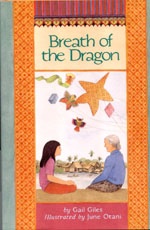
3. What does Malila draw? What reason does the teacher give for the success of her drawing?(She draws a picture of her grandmother and herself involved in a Thai custom. She shows two things she loves, her grandmother and her country.)
J. Chapter ten
1. When Malila draws pictures of Thailand when her Grandmother becomes ill, she is preparing herself for something. What is she preparing for? (She knows that she will probably have to leave Thailand. She draws the things she loves about Thailand so she can remember them.)
2. Does the river really answer Malila’s questions? Malila has changed just as the river changes. How has Malila changed?(The river never stops changing, it does not answer her questions, the fact that Malila has changed is how she can answer her own questions. Malila no longer blames her mother for leaving her. She knows that she was better off being raised by such a kind and wise woman. She was given time to know and love her native land.)
3. Why does Grandmother ask Malila to draw a picture when she tells her that Malila will soon join her mother in America? (Remember Malila’s picture almost shows a happy ending to something.) Why does Grandmother tell her to show the grandmother waving good-bye? (She makes Malila face the fact that Grandmother will not be going with her. She is telling her gently that she will soon die.)
K. Chapter eleven
1. What do we know about Grandmother when Malila releases a candle boat into the river? (Grandmother is dead.)
2. What does she wish for Grandmother? (That the dragon will breathe on her no longer—or that Grandmother’s troubles are now over.)
3. What does Malila want to remember and take with her to America? (She wants to take her memories of her native land.)
Final Question: Malila’s mother knew that she might not be a good mother to Malila. She knew that Grandmother would be a better person to raise Malila. Do you think her decision to leave Malila in Thailand was a good one? Or do you think she was merely selfish? How does Malila see her mother’s decision to leave her at the beginning of the book? Does she change her opinion at the end? How has her opinion changed? Do you think Malila would have been better off to have gone with her mother to America in the beginning? Why or why not?
III. Extension activities
A. Make a model of a spirit house. Or draw a spirit house. Be sure to use the words and pictures in the book to make sure the important elements are included.
B. Cook a simple Thai meal.
C. Make list of Thai customs. See if you can match each custom with an American custom that is somewhat like it. Ex. Folding hands and making the wai as a greeting is much like the American custom of shaking hands. .
D. Thai language is primarily a picture language. Have students make up symbols and write the book’s title in picture language of their own. Make up other title’s for the book and write those in picture language.
E. Have students write a short story of how their parents or grandparents guide them in the process of growing up.